Developer: Dark Star | Publisher: Another Indie || Overall: 7.5/10
Personally, I have very little interaction with the “Soulslike” genre. I know what Dark Souls is, but never had a chance to play the series. Games that pride themselves on being hard aren’t necessarily my thing, but I will dabble and see how far I can get sometimes. Sinner: Sacrifice for Redemption is a boss-rush “Soulslike” that feels like you started playing right at the end of a game and missed about 20 hours of gameplay.
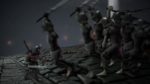
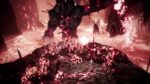
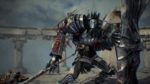
Since Sinner has been designed as a boss-rush, it relies heavily on the gameplay of its bosses, how they look, and what skill set you are given. As the title of the game implies, each of these bosses are influenced by Biblical references. Since I know nothing about any of it, it may as well have been based off the Wikipedia page about the seven deadly sins. All I know is that the bosses are all very interesting to look at, and a big pain in the fucking ass.
All together there are 8 bosses, two of which I gave two hours to exclusively. I tried the others to see what they looked like, but decided to commit to the two I thought I could beat. One boss I thought I beat, but she ended up turning into a new boss with full health, so fuck that. The other guy I beat, but the game allows you to reverse your progress and now it’s like I didn’t even beat him. Even though it says the boss will recover, it didn’t explicitly explain I would have to beat him again to progress, so I fucked up there. Additionally, each boss has a little lore piece that is a bit interesting, and you can kind of piece together a greater narrative that is going on.
Each boss will require a “sacrifice” of your stats or equipment to enter and try to beat the boss inside. This is a “leveling-down” system that will layer these sacrifices as you beat more bosses. Though beating a boss also gets you stats, you’re inevitably going to be trading off stuff you have for unknown prizes. This demands you to plan out your boss progression and figure out which bonuses or stats you need to beat certain bosses before giving them up; you can’t just beat what you think is easy now. So, in this context, it makes sense why they allow you to have a boss recover; you can gain back stats to beat another boss, then go back and beat the original boss, though this may make it more complicated depending on what other debuffs you have gathered since then.
I would say the graphics are pretty. Though much of the game is very gray, it is an obvious design choice to make it look this way to have more of an ancient/religious context. The main character is essentially a blank avatar without a personality, and the areas you fight in lack detail outside of their functional level design. The bosses are very creative-looking as the emphasis focuses on them. It is unfortunate other artistic aspects of the game seem to have suffered, though the music is okay as well.
I had some personal problems with how the gameplay works in general. It takes a while to remember which buttons do what since there is absolutely nothing other than bosses to practice on. There is one pack of enemies that spawn to help you get acquainted with the controls, but they are only around for a few minutes. The bosses killed me about fifty times before I even learned there was a run button; previously I was just using the dodge button over and over to get out of the way. There’s something to say with having filler in a game; it helps you learn how to play and get familiar with the controls before a difficult challenge.
The character has a sword and shield or 2-handed sword option for melee attacks, and a spear/fire bomb for range attacks. The range attacks don’t do much damage, but the spear can be used to stumble a boss at the right time. My biggest problems are with the bosses’ hit boxes. You have to get right into a boss’s asshole before your sword will connect, and it is endlessly frustrating to be swinging 3 times an inch away from where you need to be and make no hits. Many of the bosses have cheap abilities or deal extra damage at times which require you to run away or hide behind something, and this can add to the strategy, frustration, or both.
I would be remiss to not comment on the release of the title and the “controversy” around it. Initially this was to be released on Steam, but the developers made a deal with Discord, who opened up their own storefront recently, to give an exclusivity window. As one would now expect, the Steam version got delayed into next year, but it is currently available through the Discord store. I don’t personally have a problem with this as it is something you see on consoles all of the time. It is a new ripple in the PC field, as there isn’t much of a competition between Steam or any other non-publisher-specific storefront. Inevitably I think it is a good thing for developers, but probably a wash for consumers… unless you hate Steam.
While I technically like this game, I don’t really want to keep playing it. Games that make me yell “what the fuck!” or grunt and groan don’t often stick around. I can only enjoy pounding my head against a wall for so long. If you like this sort of experience, Sinner: Sacrifice for Redemption may be up your alley.